Offline · Solar · Sealed

Know what to do. When nothing works.

A survival library with a built-in guide, in a case that powers itself. No signal. No subscription. Every answer shows its source.

Get in touch See how it works

In development. Product images are computer renderings of the design, not photographs.
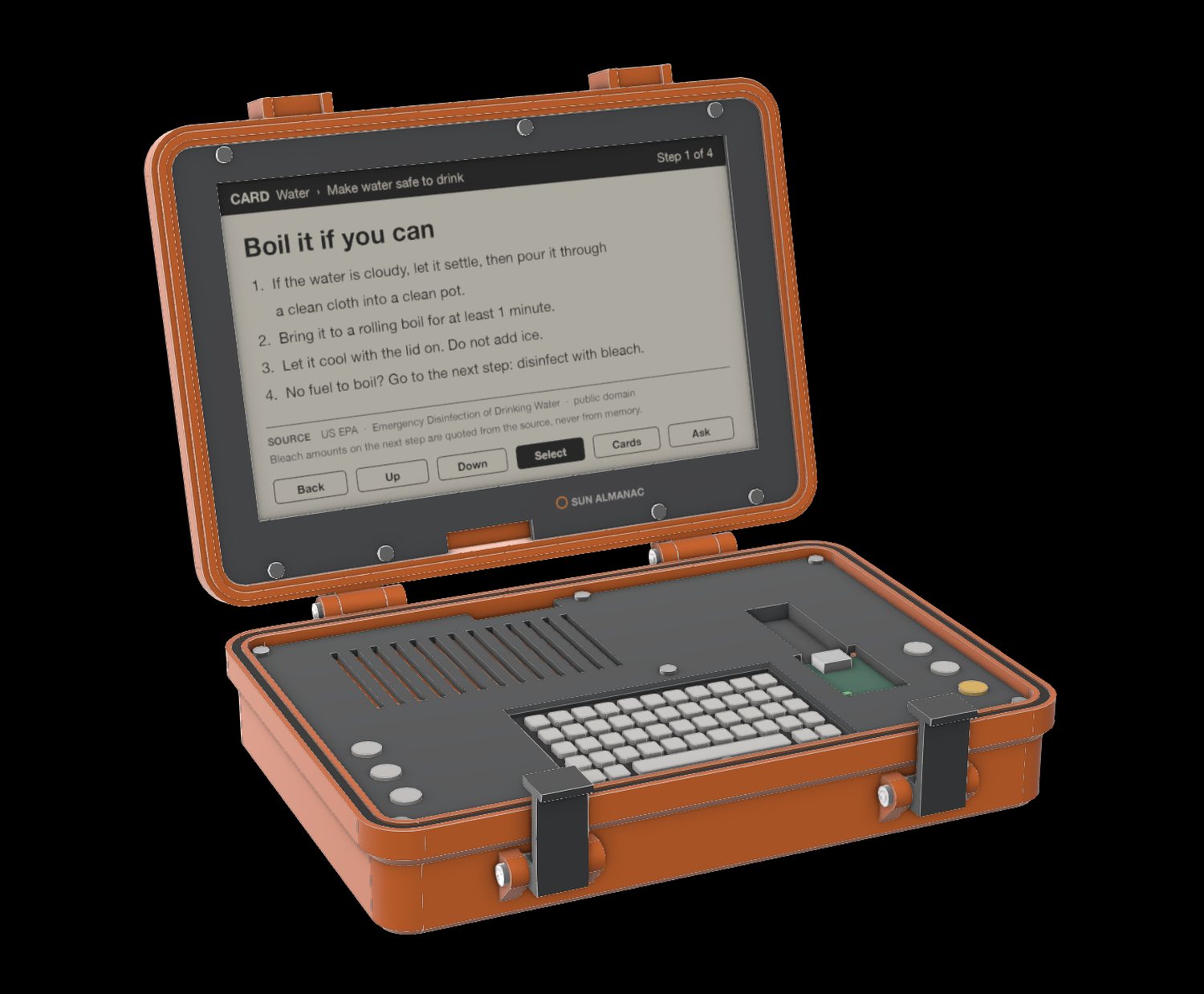
Sun Almanac open: an orange sealed case with an e-ink screen in the lid and a small keyboard in the base. The screen shows a step-by-step card on making water safe to drink.

The problem

We keep our know-how on the network.

Then a storm, a flood or a blackout takes the network away, on the one day the answers matter.

01

Knowledge is online

First aid, water treatment, how to run the generator: we search for it. With no signal there is nothing to search.

02

Phones are fragile

A phone lasts a day, needs a charger, and breaks when it gets wet. Offline apps help until the battery is gone.

03

Books do not answer

A shelf of manuals is heavy, never in the right place, and no use unless you already know which page to turn to.

The product

A library and a guide, in a case that looks after itself.

Open it and read what to do. Or ask a question in plain words and get the passage that answers it, with its source.
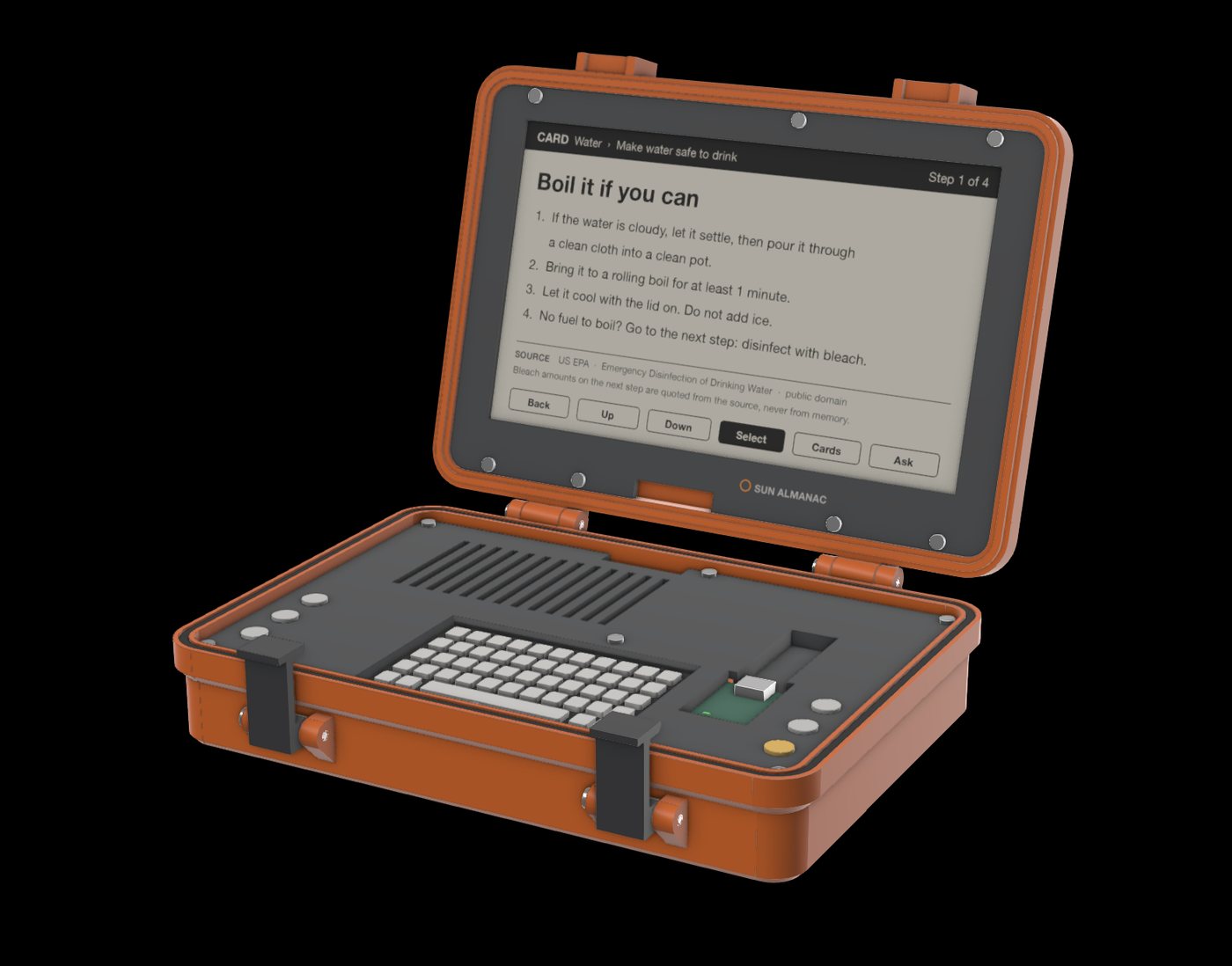
  • Works with nothing else working. No network, no cloud, no account. Everything is stored and computed inside the case.
  • Powers itself. A solar panel in the lid tops up the battery. USB-C charges it from a car, a generator or a power bank.
  • Reads like paper. An e-ink screen is clear in direct sun and holds the page without drawing power.
  • Made for a bad moment. A keyboard and six labelled buttons. No touchscreen, nothing to set up.
Sun Almanac open, seen from the front right: screen in the lid, keyboard, six buttons and a charging pocket in the base.

How it answers

Three ways to get to the right page.

1

Cards

Step by step, for emergencies

Short decision trees for the moments that cannot wait: one question per screen, then numbered steps and when to get help. Written and reviewed in advance.

“Bleeding that will not stop” · “Make water safe to drink”

2

Library

Browse and search

The whole reference library, organised by topic and searchable by keyword. Every page shows where it came from.

“splint” · “pressure canning” · “carbon monoxide”

3

Ask

Plain-language questions

Type a question. The device finds the relevant passages and shows them first, with document and page. A short summary follows, tied to those passages.

“Our well flooded. Is the water safe to drink?”

When it helps

From the first hour to the next season.

Sudden disaster

First hours to three days
  • Someone is bleeding, burned or not breathing
  • Is this water safe? What can we do right now?
  • Shelter for tonight, and the hazards to avoid

Long outage

Days to weeks
  • Keeping food safe with no refrigerator
  • Sanitation when the taps and toilets stop
  • Running a generator or stove without poisoning anyone

Beyond the network

Remote homes, boats, expeditions
  • First aid when help is hours away
  • Fixing the pump, the engine, the radio
  • Weather, navigation and your own equipment manuals

Recovery and self-reliance

Weeks to seasons
  • Growing and preserving staple food
  • Making and storing power
  • Looking after health over time without a clinic

What is inside

Fourteen topics, and room for your own.

The built-in library is organised around what people need to do, not around book titles.

Urgent

  • Someone is hurt or sick
  • Disasters: quake, fire, flood, storm
  • Safe drinking water
  • Sanitation and hygiene
  • Warmth, cooling and shelter
  • Food safety and cooking
  • Power outages
  • Communication and finding your way

Longer term

  • Health care over time
  • Growing staple food
  • Preserving and storing food
  • Making and managing power
  • Repair and building
  • Land, hazards and resources

Built-in content comes only from public-domain and open-licence sources. Emergency Cards are to be reviewed by qualified experts before release.

Who it is for

One device, five kinds of owner.

Same hardware and the same library for everyone. What changes is what each owner adds.

Households and families

Kept at home or in the car

First aid, water, food and warmth, with children and older relatives in mind.

Off-grid and remote

Rural homes, boats, cabins

Repair, power and water systems, and health care a long way from a clinic.

Expeditions and field teams

Vehicle or base camp

First aid, navigation, weather and improvised repair, plus the team’s own protocols.

Community groups

Neighbourhoods, shelters, schools

Running a shelter, sanitation for many people, and keeping volunteers coordinated.

Organisations

Municipalities, utilities, relief agencies

Their own plans and procedures, on every unit, with no power or network needed.
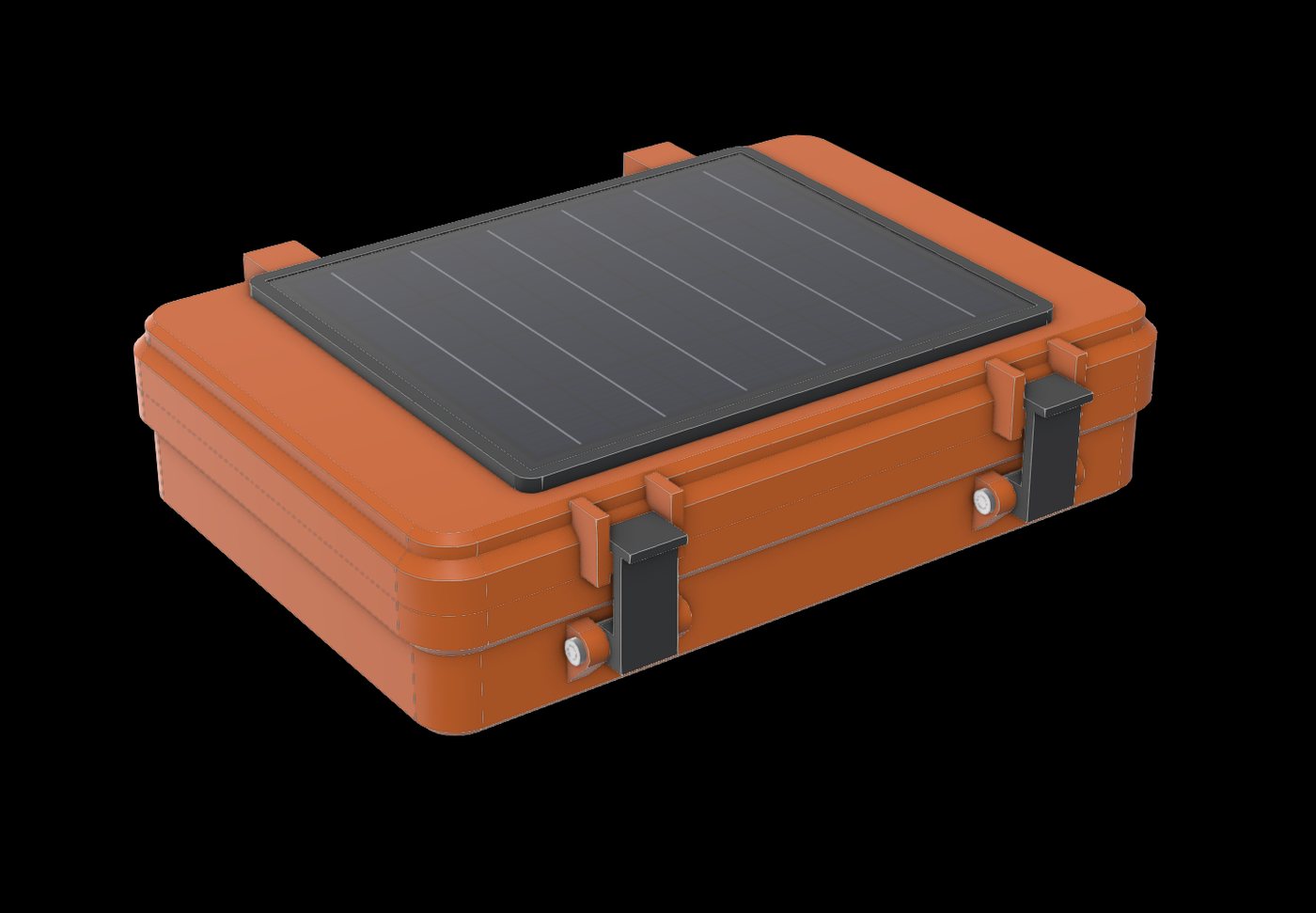
Sun Almanac closed: an orange case with two dark latches and a solar panel covering most of the lid.

The hardware

Leave it in a drawer. It will be ready.

  • Sealed when closed. A gasket runs around the rim, and no socket, button or vent passes through the outer shell. The screen and keys are protected inside.
  • Sun on the lid. The solar panel faces up whenever the case is shut, so it charges while it waits on a windowsill or a dashboard.
  • Nothing to subscribe to. No SIM, no account, no licence that can lapse. No radio at all.
  • Serviceable. Standard screws, a replaceable battery and a memory card for content.

Sealing is by design; the ingress rating has not been tested yet.

Why you can rely on it

A small AI that knows it is small.

Small language models get facts wrong. In our own quick test, one answered 5 of 16 survival questions wrongly, including a child’s medicine dose out by a factor of about 100. So the design never lets the model be the source.
  • Source first. Every answer leads with the passage it came from, with document and page.
  • No invented numbers. Doses and quantities are quoted from the source. Sums are done by a calculator in the software.
  • Honest gaps. If the library does not cover it, the screen says “not in the library”.
  • Works without the AI. Cards and the Library run on the low-power controller alone.
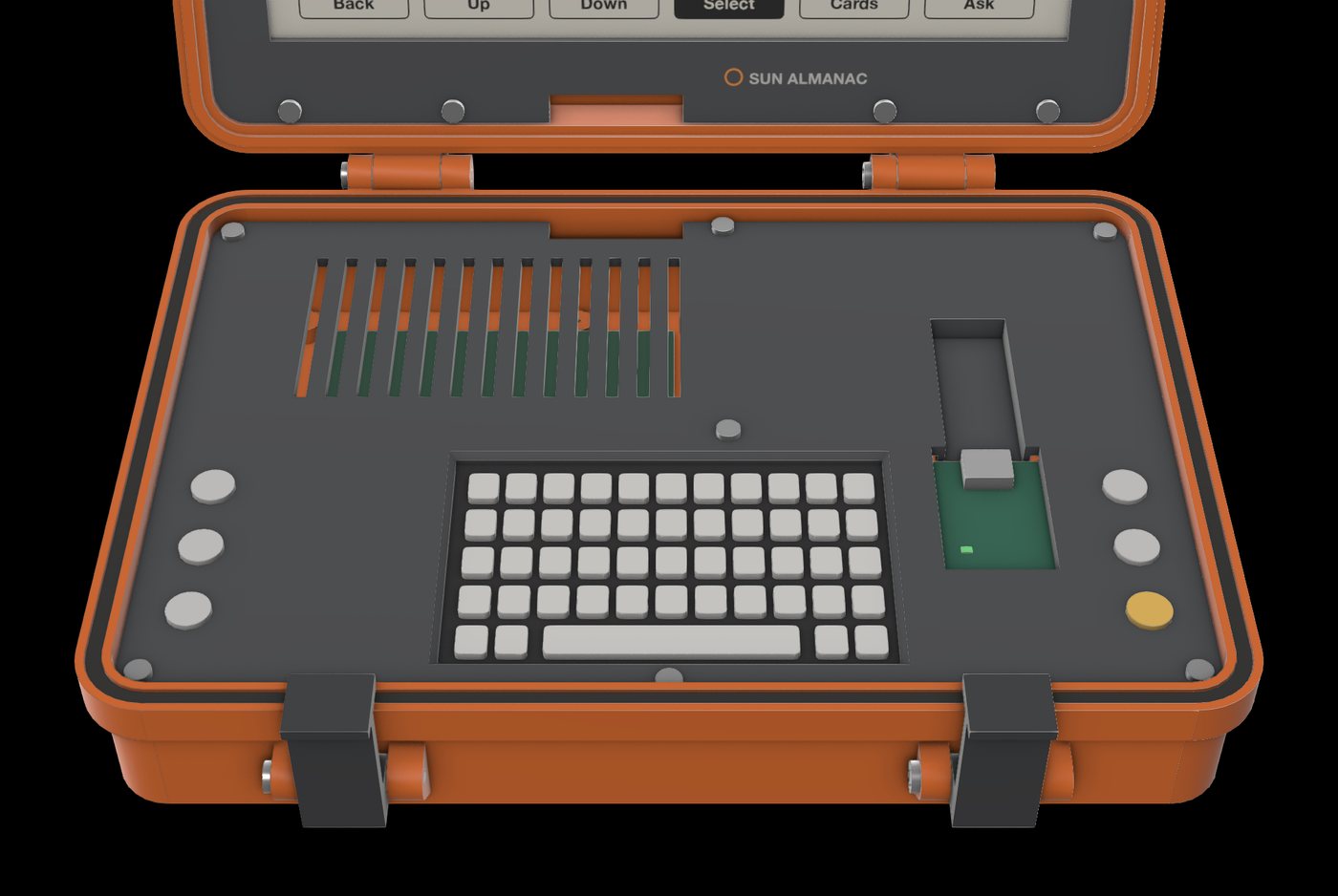
Close view of the deck: keyboard, three buttons on each side, vents and the charging pocket, with the name Sun Almanac under the screen.

Specification

What we are building toward.

ItemProduct targetFirst prototype
ScreenE-ink, about 7.8", front-litE-ink 7.5", 800 × 480
PowerAbout 40 Wh battery, solar lid37 Wh battery, 2.4 W panel
Use per chargeAbout 200 questionsTo be measured
Reading and CardsEffectively unlimitedTo be measured
Time to an answerPassage in 3 s, summary in 60 sEstimated 2 to 3 min
Storage512 GB plus memory card256 GB memory card
ProtectionIP67 when closedGasket-sealed, untested
RadioNoneNone

Targets and estimates from the product specification. No unit has been built or measured yet.
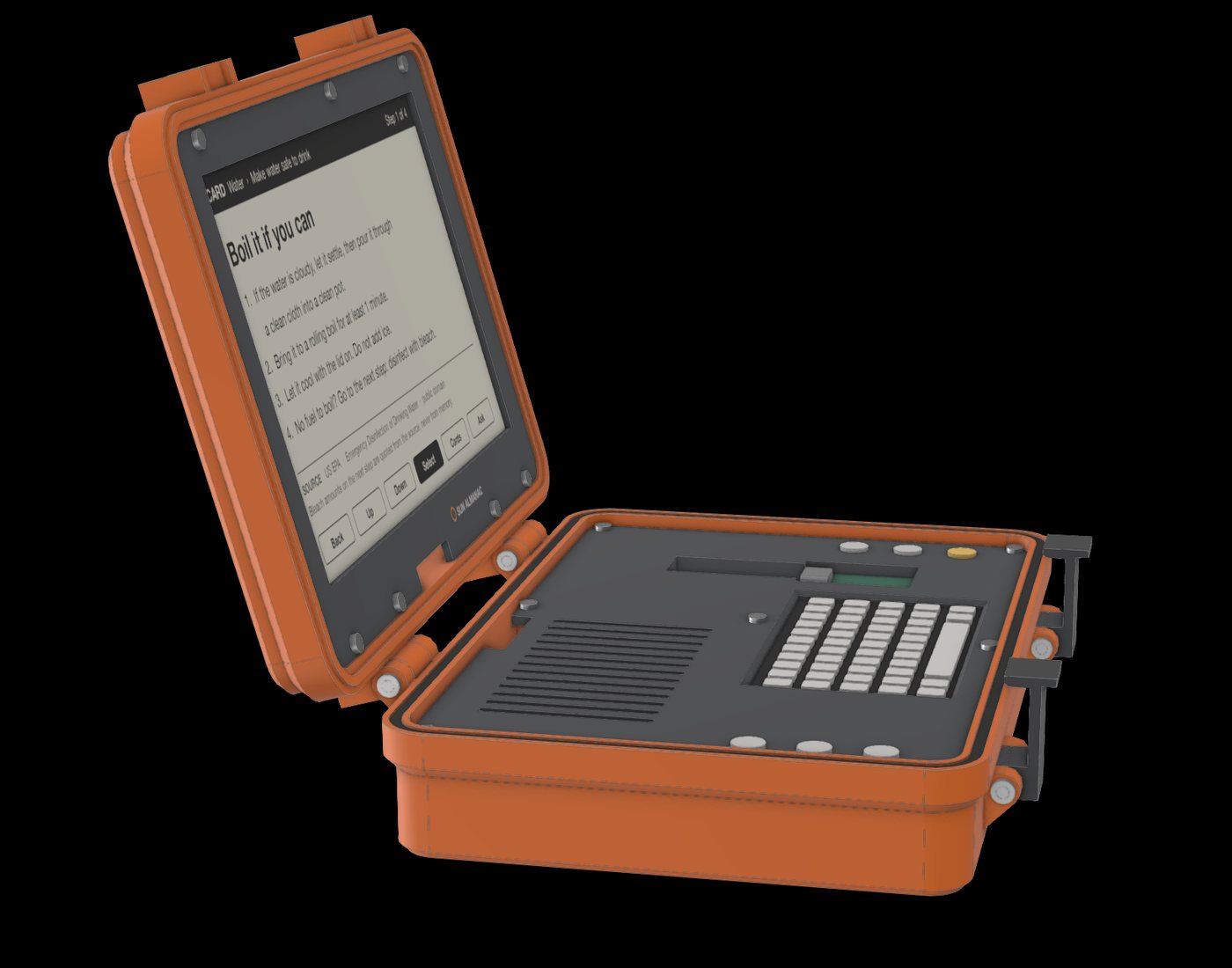
Sun Almanac open, seen from the side, with the lid held at a reading angle by its hinge.

Where we are

Honest status: designed, not yet built.

The specification, the electronics plan and a printable sealed case exist. The first unit does not.

  1. Done

    Design

    • Product specification
    • Electronics and wiring plan
    • Printable case, checked in CAD
    • Parts sourced and priced
  2. Next

    Prototype

    • Build the first unit
    • Measure energy per question
    • Measure solar harvest
    • Water and drop tests
  3. Then

    Content and pilot

    • Open-licence library assembled
    • Emergency Cards written and reviewed
    • Units with early users
    • Answer quality measured on a test set
  4. After

    Product

    • Custom electronics, slimmer case
    • Ingress and safety certification
    • Regional and language packs
    • Production

Get in touch

Help us get the first one built, and built right.

We are looking for the people who will make it trustworthy.

Expert reviewers

Clinicians, water and sanitation engineers, and emergency managers willing to review the Cards.

Early users

People willing to test a prototype and tell us what is missing.

Partners

Organisations with content, distribution or a need for many units.

Email us

Sun Almanac gives reference information. It is not a medical device and is no substitute for professional help when help is available.